
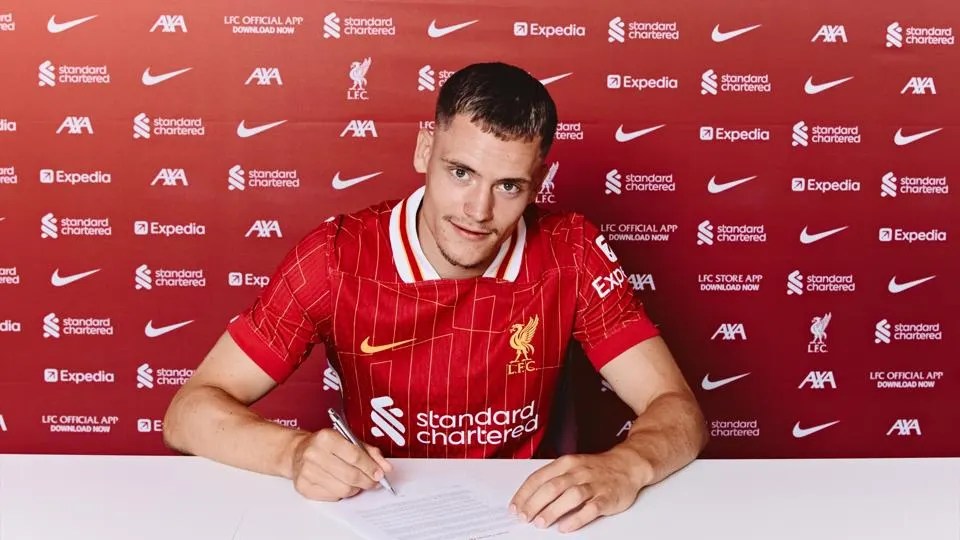
Liverpool have snapped up Germany’s prodigious talent Florian Wirtz from Bayer Leverkusen in a deal reportedly worth £100 million upfront, potentially rising to £116 million through performance-related add-ons. That makes it Liverpool’s biggest-ever transfer – and if all bonuses are triggered, it would also shatter the British transfer record, surpassing the £115m Chelsea paid for Moisés Caicedo. The attacking midfielder has signed a five-year contract running until June 2030, with weekly earnings likely around £200,000 – possibly rising to around £245,000 with add-ons.
Firstly, there has been far too much player market inflation. Is the current takeover of transfer fees even sustainable? We’re talking about astronomical sums being thrown around – Real Madrid, Manchester City, PSG, and Chelsea are throwing megabucks at aging superstars or young, unproven talent, each hoping for instant success. That drives a vicious cycle: clubs spend big not because they’re smart, but because they feel pressured to win trophies now. That energy around “buy now, win now” inflates prices, affecting supply and demand for any world-class prospect. Wirtz is the latest example – Liverpool clearly felt the need to act quickly to secure him before Bayern or City could outbid them.
Also, sometimes players can often feel pressure when they have a heavy price tag, a pressure to perform because a club has invested serious amounts of money and effort to sign you. An academy player or a cheap transfer signing, has less expectation and so more freedom to grow and develop as a player. Once a player crosses the £100m threshold, the spotlight can feel more like a cage. Take Jack Grealish £100m to City came with sky-high expectations, and injuries or form dips quickly turned that into criticism. Or Neymar, whose Al Hilal move came with huge pay and pressure, but injuries severely limited his impact. And sometimes, players signing for the cash can clash with club culture – the right mentality is essential. Liverpool have long stressed tactics, culture, and teamwork – investing so heavily in Wirtz means they believe he fits their identity, but there’s always a risk: no matter how talented, context matters.
Florian Wirtz is undeniably a world class footballer with natural ability, he has far more strengths than weaknesses in his game. At just 22, Wirtz is already considered one of the best attacking midfielders in the world. He’s very creative – decisive passing, nimble on the ball, excellent vision – and scores and assists consistently: last season he bagged around 10 goals and 12 assists in 25 Bundesliga starts, plus strong Champions League contributions. He’s physically smart too – runs more than 10 km per game, presses hard, and recovered brilliantly from an ACL injury to return stronger than ever. But he’s still young – there’s room to grow, and occasionally his end-product or decision-making in tight moments can waver. So yes, world-class ability – but paying up to £116m? That still feels steep given the uncertainty in adaptation and consistency.
Honestly? It does feel like too much money. But it also feels inevitable in today’s pumped-up transfer market: once the bar is raised, everyone chases it. Individual players like Wirtz aren’t to blame – it’s the market, the competitive pressure, and the desire for instant success that fuel these deals. Yet spending this kind of cash always comes with risk, even for deep-pocketed clubs like Liverpool. Still, I’d be surprised if Wirtz didn’t thrive – he’s already a winner: Bundesliga champion, DFB‑Pokal winner, DFL‑Supercup winner, Europa League runner-up, and Germany international with over 30 caps – so the talent and pedigree are there. He is joining a club with ambition under Arne Slot, and if he adapts well, the fee will look fair in retrospect. Wishing Florian the best – both at Liverpool FC and with the German national team – because this exciting journey is just getting started.

 The Football Journal
Leave a comment